Featured: What makes Picnic uncopyable
Jun 1, 2025
Picnic is a good example of what in Bitsing terms is called the 'Golden egg'.
The Golden Egg is what makes a company, institution, or organization uncopyable, and thus leaves the competition behind.
Picnic knows how to convey this clearly, including a commercial that (for Bitsing connoisseurs) perfectly captures the B and I.
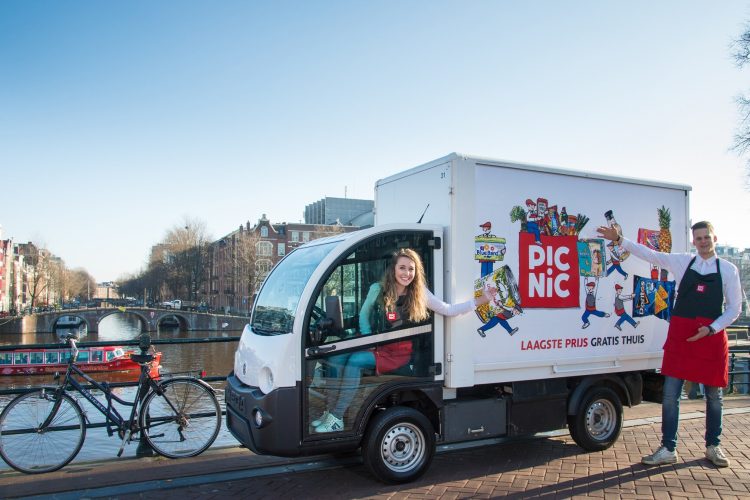
Picnic. Supermarket on wheels. Behind those small carts lies a huge advantage. The advantage of not owning any real estate and therefore NO EXPENSIVE STORES. And that means low prices and super fresh produce. As Picnic puts it: what a small cart can be great at.
Supermarket on wheels
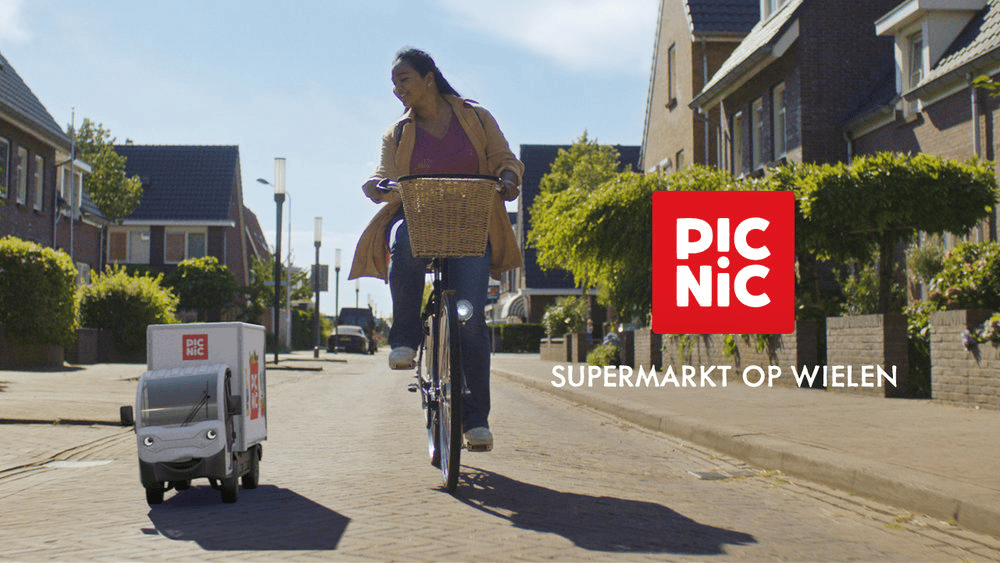
Grocery shopping is part of life, but sometimes it feels like a necessary evil. That's why the founders* of Picnic thought it could be faster, easier, and cheaper. So, in September 2015, they started a storeless supermarket in Amersfoort with four delivery vans.
You order your groceries through an app, and Picnic takes care of the rest. And the fact that this idea was a success is confirmed by the more than 1,000 vans currently operating in around 120 Dutch cities. With hundreds of thousands of customers and rapidly expanding to new cities and countries, Picnic was awarded the fastest-growing company in the Netherlands in 2019.
Besides the Netherlands, Picnic is now also active in Germany (since 2015) and France (2021).
*Joris Beckers, Frederik Nieuwenhuys, Michiel Muller, and Bas Verheijen. Gerard Scheij also joined later.
Thank you so much for another inspiring session about the wonderful world of Bitsing! I've received nothing but enthusiastic feedback from my colleagues: "What an interesting session yesterday," "Very inspiring," "A really good story," and I thought it was a truly interesting presentation!"
Marly van Walsem, Trading Operator at Picnic
No expensive stores in expensive locations
Picnic delivers groceries to your home free of charge and at the lowest price. Heard it before? Absolutely! But the simplicity behind Picnic's concept lies in the necessity of being an imitator-friendly brand.
Picnic is the supermarket without expensive stores in expensive locations . This allows it to offer low prices without compromising product quality, and to offer these products with improved freshness, because there's no need to restock shelves.
Picnic's non-copyable slogan
Picnic launches its first "SUPERMARKT ON WHEELS" campaign.
Fresh produce isn't just stored in the physical supermarket for a few days. Everything goes straight from the farmer or baker to the kitchen. When the online Picnic checkout closes at 10 p.m., the baker knows exactly how many loaves of bread he needs to bake for the next day. This way, Picnic never has to throw anything away.
And by not crisscrossing the city every day, but following a smart route through the streets (like a city bus), Picnic can carry groceries for the entire neighborhood at once. This saves countless trips to the supermarket. The 100% electric cars are environmentally friendly, quiet, and surprisingly narrow for a reason. They're never in the way.
Of the Dutch people who shop online, 50% do so at AH, 25% at Picnic, which leaves Jumbo (23%), Plus (9%) and Coop (3%) behind.
Find your way to Picnic
Background:
To rapidly expand, wealthy families such as Fentener van Vlissingen (SVH Holdings), Hoyer (who became wealthy through a stake in Heineken), Van der Wal (Boni), and De Rijcke (Kruidvat) invested €100 million in the company in 2017. The same family funds contributed €250 million in financing for a new distribution center in Utrecht in 2020, and €600 million was raised in 2021 to further accelerate growth. In addition to existing investors, the Bill & Melinda Gates Foundation Trust is participating.
The brief history of home delivery
Grocery home delivery has been around in the Netherlands for ages. Many grocers already did this or collected groceries by appointment. Remember the SRV (Retail Delivery Service)? Orders were placed by phone, via forms, and later by fax.
Online grocery shopping began in the 1980s with Unigro's James Telesuper, which offered customers the option of ordering groceries remotely, both digitally and physically. But it never reached more than 300 customers.
Unigro sold James Telesuper to Albert Heijn, which thus took over as the pioneer in the online supermarket sector. In the late 1990s, the name was changed to AH Thuisservice and later Albert.nl. As the forerunner of the online supermarket, AH is still by far the market leader in online grocery ordering in the Netherlands.
The market received a huge boost during the coronavirus crisis. Research by real estate consultant Colliers International showed that 260,000 Dutch households ordered groceries online for the first time during the coronavirus crisis.
Colliers after the first day of Bitsing:
“There is so much positive feedback on the session that we want to put extra people in a kind of broom class to catch up on this first round.”
Bas Ambachtsheer, chief technology officer at Colliers.
Nielsen figures show that the arrival of Picnic is a significant blow to traditional supermarkets. Supermarkets competing with Picnic saw an average turnover drop of €40,000 in the first 40 weeks after its launch. The drop in turnover is twice as large for stores owned by retailers that also sell groceries online. Picnic is the second largest retailer in food e-commerce after Albert Heijn.